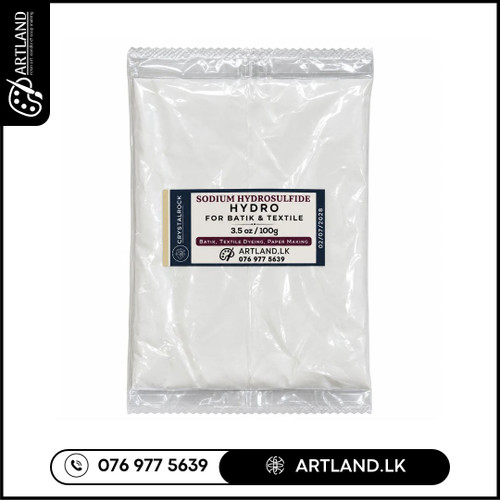

Sodium Hydrosulfide (NaHS), Textile & Dye Processing Chemical | Sri Lanka
WARNING: Causes severe skin burns & eye damage. Toxic in contact with skin and potentially fatal if swallowed. Can release highly toxic, flammable hydrogen sulfide gas, particularly when exposed to acids or moisture.
Use suitable chemical-resistant gloves, protective clothing and eye protection, with appropriate extraction & exposure controls. Keep dry, tightly closed and away from acids, strong oxidisers, children and pets. Seek immediate medical attention following exposure.
Sodium hydrosulfide is a processing chemical used in selected textile dyeing & industrial applications. For textile workshops in Sri Lanka, sodium hydrosulfide for sulphur dyeing acts as a reducing agent, helping suitable dyes dissolve during processing.
Uses & practical details:
- Sulphur-dye processing: Helps bring compatible sulphur dyes into solution under controlled conditions.
- Dye manufacture: Used in making certain colours & dyes.
- Other industrial uses: Includes pulp & paper processing, leather processing.
The amount required depends on the dye, product concentration and processing conditions. Follow the chemical supplier’s technical instructions rather than using a general mixing ratio.
Technical information:
Chemical name: Sodium hydrosulfide
Alternative names: Hydro, Sodium hydrosulphide, sodium hydrogen sulfide, sodium bisulfide
Formula: NaHS
CAS number: 16721-80-5
Package contents: 1 × 100g sodium hydrosulfide, Hydro Powder.
Common questions:
- Question: Can I use it for every batik dye?
Answer: No. Use it only when the dye supplier specifically requires sodium hydrosulfide. - Question: Is it the same as sodium hydrosulfite?
Answer: No. They are different chemicals and should not be substituted. - Question: Does it make colours permanent?
Answer: It supports certain dyeing processes. Colourfastness depends on the complete dyeing and finishing method.